On writing:
When it comes down to writing…what connects with people is you connecting with yourself.
On writer’s block (this is blogging):
Writer's block is not a failure to write. It's a failure to catch this feedback loop of enjoying what you're seeing and wanting to contribute more to it.
On failure:
“That didn’t work” is ok to say. But “That won’t work” is not a way to go through life.
On finding yourself through copying and imitation:
Failing to sound exactly like the person you want to sound like is a wonderful way to sound like yourself…I’m not thinking of this thing from scratch, “Ok I’m gonna do Jerry-esque things, but I'm still gonna sound like me.” No it’s more like, “I’m gonna sound just like Jerry.” And then the way I naturally, obviously don’t, that’s your personality.
It’s as if we care more about what Google considers to be fast than actual UX.
Gotta get those numbers.
I enjoyed this whole thread, but this particular tweet was razor-sharp:
As a result, we need to view products over a 5+ year lifespan, rather than through the lenses of a release or a series of sprints. Something that’s very difficult to do when we bounce between jobs every 18 months.
Some other pieces of the thread I liked:
[the tension:] Designers generally believe in exploring the problem space, iterating towards a solution and then launching. Founders often believe in launching, seeing how the market reacts and then iterating/pivoting if needs be.
What you build in the early days is almost certainly wrong, and will most likely get thrown out later on…In the early stages of a new venture, neither the company or the market are really ready for quality yet.
But we do need to understand that for a large part of a product’s life, the process is optimised around speed and efficiency over solution fit. That the most successful designers are essentially pragmatists.
[the designer’s role] isn’t necessarily to come up with the perfect solution right out of the gate, following the structure of the double diamond. But is instead to put something out into the world that’s better than what existed before.
As Obama says: “Well, better is good. Nothing wrong with better.”
I use hand sketches as long as I can to communicate concepts to stakeholders and teams.
I believe in showing the work at the fidelity of the thinking.
The higher the fidelity of the image, the higher fidelity the perceived thinking is behind it.
I’ve been feeling the need for these kinds of words lately:
Raise the speed
Raise the quality
Narrow the focus
“Everybody wants results, but not everybody wants to do what that takes.”
Which links to this article (which, to be honest, I only skimmed because it’s quite long and full of CEO-speak):
As a leader, your opportunity is to reset in each of these dimensions. You do it in every single conversation, meeting, and encounter. You look for and exploit every single opportunity to step up the pace, expect a higher quality outcome, and narrow the plane of attack. Then, you relentlessly follow up...
Things we make will usually not be perfect. Absolute perfection is always elusive. However what makes us manifest palpable “perfection” is care. You can sense care, just as you can sense carelessness.
There are two types of software companies: those that ship code that embarrasses their engineers and those that go bankrupt.
Based on my experience thus far in my career, I would agree with this statement. Granted it’s a black and white statement, but if you read between the lines, the essence here resonates with me.
I think a corrollary to design would quite frequently hold to be true as well: “there are two types of software companies: those that ship products that embarass their designers and those that go bankrupt.”
Great design can’t ship without great relationships. Be pleasant to work with! Design is the minimum bar, relationships are the highest bar.
Visual hierarchy is...the underpinning of all visual communication. Without it design has no value. “I don’t paint things. I only paint the difference between things.” – Henri Matisse
Problem definition becomes clearer as we begin solving the problem, refine the problem further, solve the problem further, repeat. The process is circular, not linear.
Some good points in there.
With every passing day that I work in technology, I find this quote more and more relevant:
Replace "can you build this?" with "can you maintain this without losing your minds?"
This just seems so true, probably because I subscribe to “people can come up with statistics to prove anything”:
If you have enough data you can prove anything. Which is to say that with enough data everything is true, so nothing is. All great insights I’ve ever seen have come from n=1.
Look at this screenshot of the console.
One of the most powerful web debugging techniques I'm aware of is adding colors to console.log. Makes it possible to spot high level patterns in an otherwise noisy stream of data.
A cool technique I didn’t know existed. There’s also a gist on how to implement.
A neat little .gif depicting the idea of downsampling in computer graphics but on a physical, real-world object.
Iconic iconist Louie Mantia on twitter:
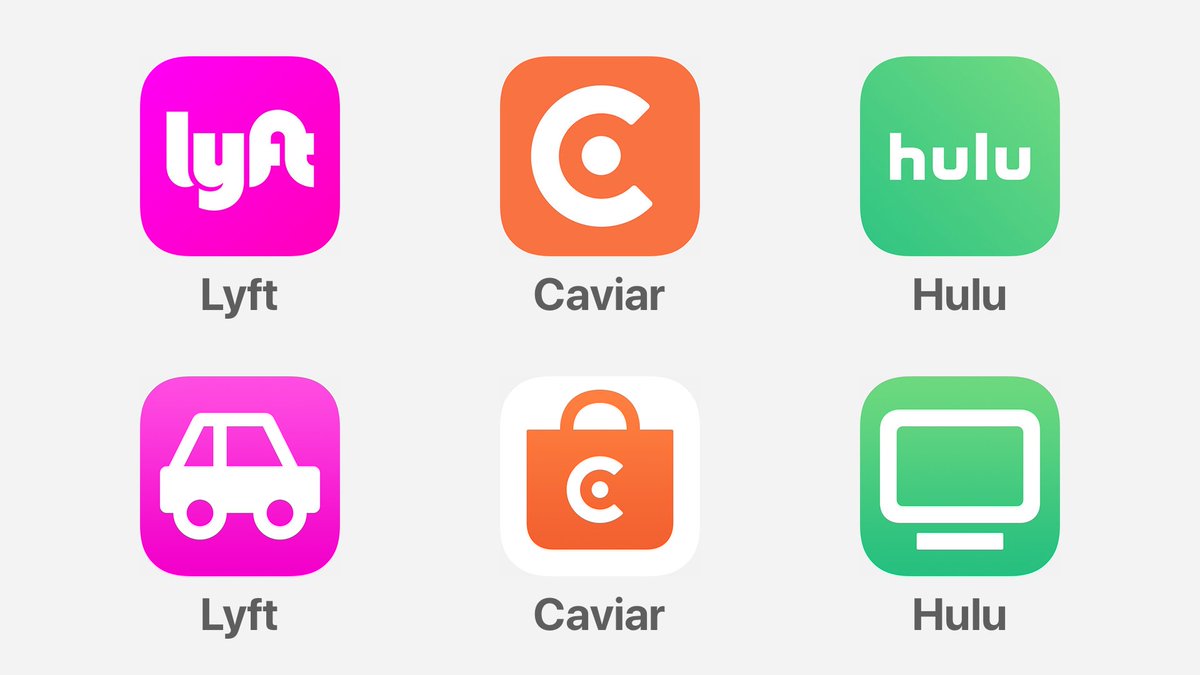
Icons: they’re not logos.
Use elements of your brand like color, shape, weight, and style, but resist the urge to just use your logo.
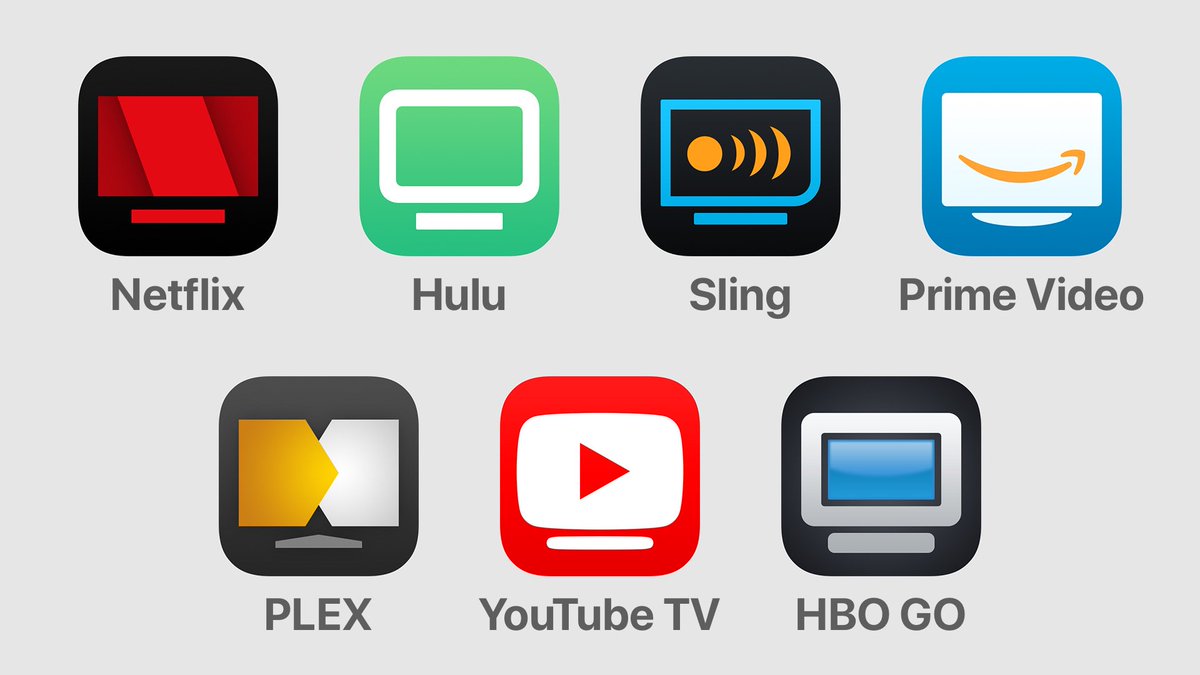
This first photo was illustrative of his point, but he followed up with another tweet illustrating how different brands could use the same metaphor of a TV in designing their icon without losing brand “equity” (see the photo).
I, for one, like it. I’d love to see more icon design like this in the wild.
I’ve always enjoyed following Dan, he brings a dose of reality and empathy to a tech world often awash with exaggerated claims.
@thekitze
If we would start webdev from scratch and had to choose between:
- CSS vs css-in-js
- REST vs GraphQL
- Templates vs JSX
No sane person would choose the first options
@dan_abramov
There are three things wrong with this tweet:
- Calling people insane for technical choices is an asshole move
- This paints React community as obnoxious know-it-alls
- Tech on the right is both overkill for smaller sites (majority of the web) and still far from being “done”
@thekitze
Dan, this has nothing to do with React or frameworks.
What I'm trying to say is: just imagine if these weren't technical choices and we had to invent ways of styling, passing data & writing components.
I don't know if people are trying too hard to misunderstand the tweet.
@dan_abramov
It has to do with React because you are prominent in the React community. Whether you want it or not, people from other communities reading this will think “React developers agree with this person that I’m insane for liking e.g. CSS”.
@thekitze
Sane might have been a wrong word. Maybe "experienced".
Still, people are misunderstanding the "invent" part of the tweet. If we had to invent styling most experienced developers would choose tight coupling of styles to elements (otherwise Sass/Less/BEM/Modules wouldn't exist)
And then this — IMO an incredibly insightful, reasoned response in a technological discussion.
@dan_abramov
Again, you’re implying that the other side of the tradeoff only appeals to inexperienced people. This is super patronizing. Have you considered that maybe you lack the experience to appreciate simpler options that match the problem domain more closely?
I love that phrase: “Have you considered that maybe you lack the experience to appreciate simpler options that match the problem domain more closely?”
I love when someone conjoins just the right words in just the right order. Thanks Dan.
The older I get, the more every problem in tech seems to be a matter of getting humans to work together effectively, and not tech itself.
The work of an experienced software developer... perception vs. reality.
Checkout the image.
Mar Headland has been working as an engineering manager since 1994. Recently on Twitter he talked about how he gets lots of requests for management advice. So, based on the list of questions he’s compiled over the years, he generated the following advice (rolled out in ten tweets):
- Just tell them already. One of the best things you can do as a manager is be completely blunt about what you see. Tell them now.
- Trust is the currency of good management. You cannot be a great manager if the people with whom you work do not trust you.
- Regular one-on-ones are like oil changes; if you skip them, plan to get stranded on the side of the highway at the worst possible time.
- You have to be your team's best ally and biggest challenger. You can't be a great leader by care-taking alone. Push for their best work.
- Repetition feels silly but works wonders. Start each conversation repeating the overall goal and connecting it to the discussion.
- "My team wants to work on ___ because it is more fun for them, is that okay?" No. Never. Quoting @jasonk: "Winning is fun." Go win.
- Clarify the problems your team needs to tackle. Stay all the way away from specifying the solutions. That's their job, not yours.
- You can't know how the company looks from any other seat than your own. Practice with people in other seats to communicate and manage well.
- We talk a lot about diversity and inclusion. Here's my unpopular opinion: you, as a manager, have to force it to happen, or it won't ever.
- Usually when people ask, "Should I fire this person?" the answer is yes. But usually they do it dramatically more brutally than needed.